
Sar Pass Trek
The classic Parvati Valley beginner trek, ending in a snow slide that can run a full kilometre.
Easy – Moderate
A short forest-and-waterfall walk to a natural sulphur hot spring at 2,960 m — the easiest way into the Parvati Valley.
Kheerganga is the gentlest trek we run, and it is the one we recommend to anyone who has never spent a night in a tent. The trail leaves the road at Barshaini, crosses the Parvati River, and climbs steadily for about 12 km through pine forest, past the Rudranag waterfall, to a green shoulder of meadow at 2,960 m.
At the top there is a natural sulphur hot spring, hot enough to sit in while looking straight down the length of the Parvati Valley. There is a small temple, a scatter of cafes and camps, and very little else.
It also happens to be the second day of our Pin Parvati Pass expedition, which makes it a useful way to test your legs and your gear before committing to something much bigger.
| Duration | 2 Days |
|---|---|
| Total distance | ~24 km round trip |
| Maximum altitude | 2,960 m (9,710 ft) |
| Difficulty grade | Easy |
| Best season | March – June, Sept – Nov |
| Base / start point | Barshaini (via Kasol) |
| End point | Barshaini |
| Suitable for | First-timers, families, weekend trekkers |
| Starting from | ₹3,500 per person |
A tall snake-shaped waterfall about halfway up, with a small shrine beside it and the best tea stop on the trail.
A well-marked, well-shaded path that climbs gradually — no exposure, no technical sections.
A sulphur spring at the top, walled into a small pool, with separate sections for men and women.
The meadow at Kheerganga looks straight down the valley towards Tosh and the peaks beyond.
Barshaini is a road head, so the trek starts within a couple of hours of Kasol.
Low altitude, warm nights in season, and a short walk out the next morning.
Distances and timings are guidelines. Your trek leader may adjust the plan for weather, snow or group pace.
~12 km trek · 4–5 hours · 2,200 m to 2,960 m
~12 km trek · 3–4 hours · descent to 2,200 m
Exactly what your trek fee covers, and what it does not. No surprises at the road head.
Monk Trails provides: Tent · Sleeping bag · Sleeping mat · Dining tent · Kitchen tent · Microspikes (when required) · Safety equipment · First aid kit
Clothing, footwear, trekking gear, documents and medication — we keep one master checklist for every Monk Trails route, with notes on what to leave at home.
Tents, sleeping bags, sleeping mats, dining and kitchen tents, microspikes and safety equipment are provided by us. You only need to bring personal kit.
Full packing checklist
Easy. It is about 12 km each way on a well-marked forest trail with a gradual climb, and the maximum altitude is only 2,960 m. No prior trekking experience is needed.
It is possible for a strong walker starting early, but we run it as two days so you get the hot springs, the sunset and a night in camp instead of a rushed round trip.
Yes. There is a walled pool at the top with separate sections for men and women. Please carry a quick-dry towel and do not use soap or shampoo in the spring.
March to June and September to November. Avoid peak monsoon (mid-July to August) when the trail is slippery and landslide-prone.
The classic Parvati Valley beginner trek, ending in a snow slide that can run a full kilometre.
Easy – Moderate
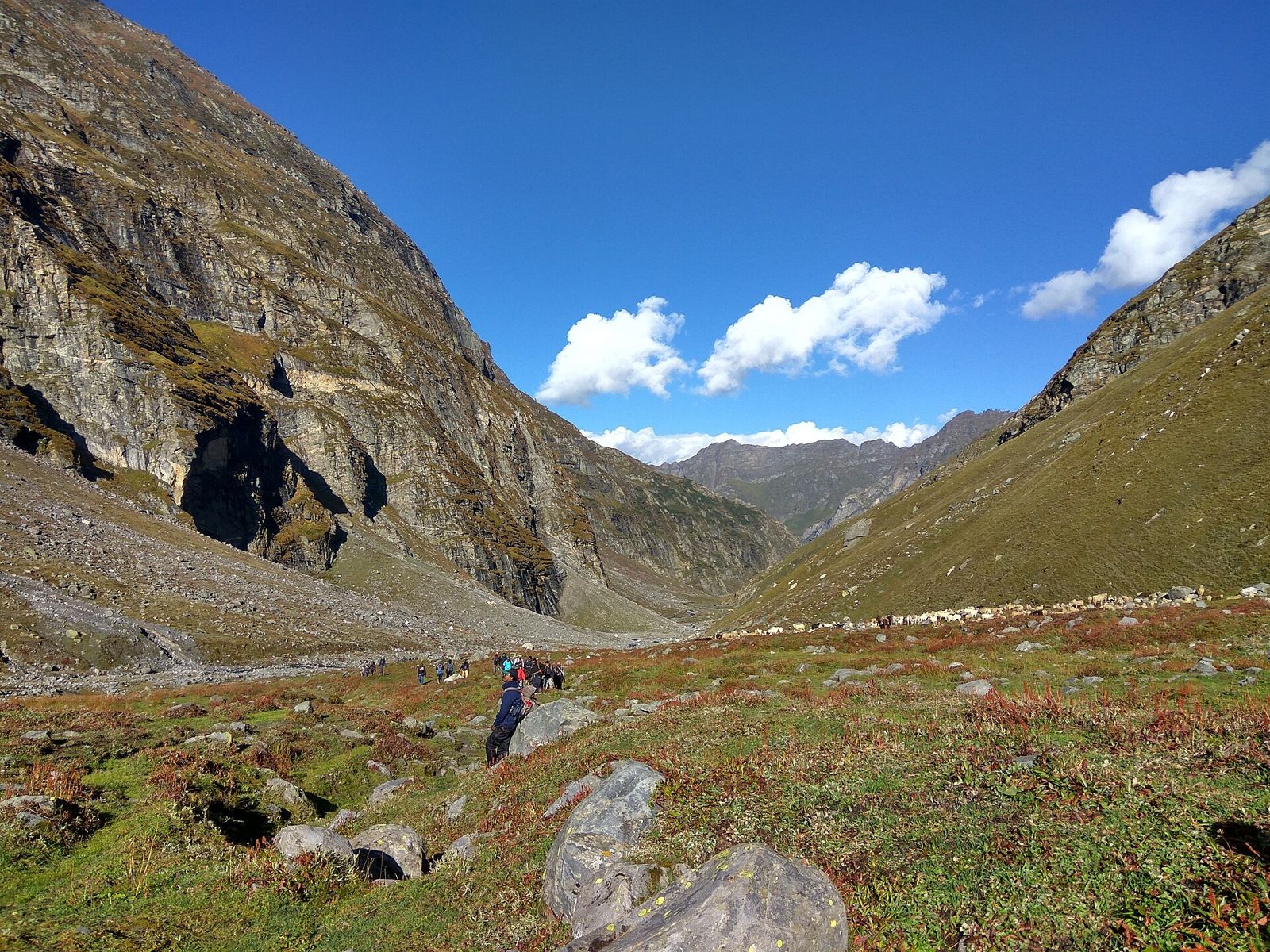
The most dramatic short crossover in the Indian Himalaya: green Kullu on one side, the grey desert of Lahaul on the other.
Moderate
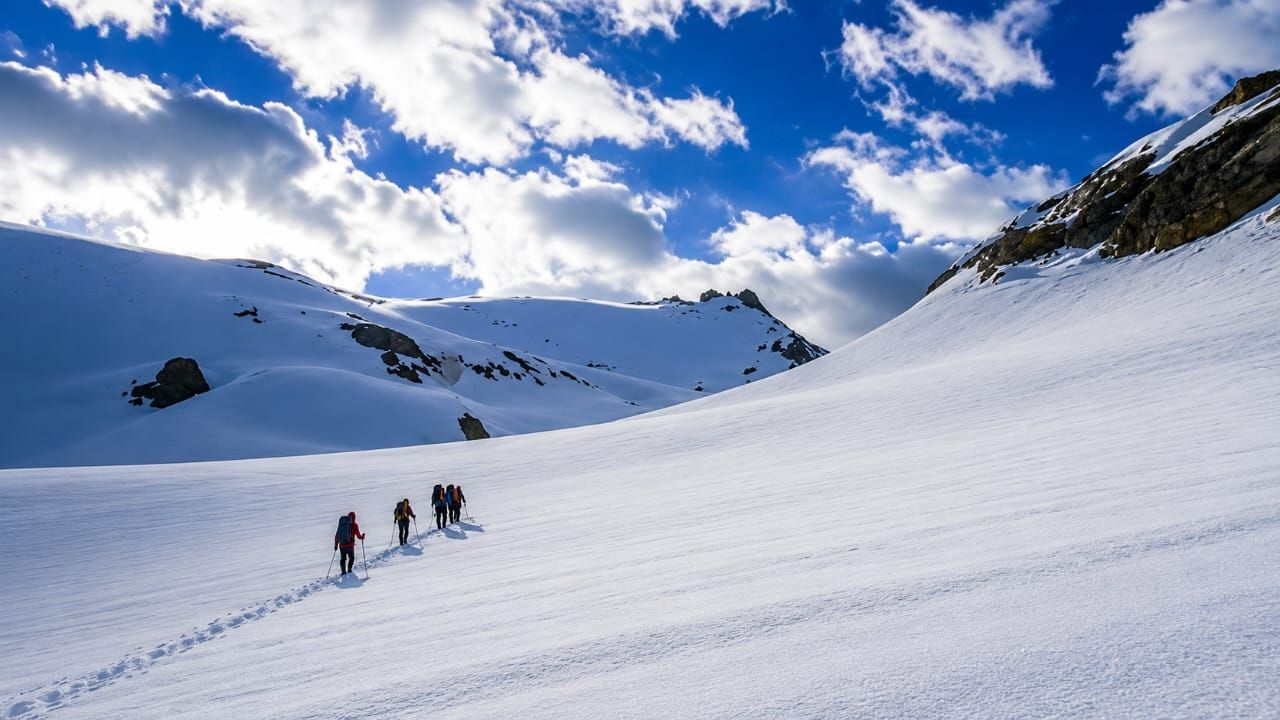
The crossover expedition that links green Parvati Valley to the cold desert of Spiti over a 5,319 m glaciated pass.
Very Difficult
Altitudes and distances are approximate and vary slightly by route and operator. Trek difficulty: Easy. Best time: March – June, Sept – Nov.
Small fixed-departure groups. Certified trek leaders. Permits, camps and meals sorted. Tell us your dates and we will hold a slot.
Enquire & Book